StormCenter logo

Archive

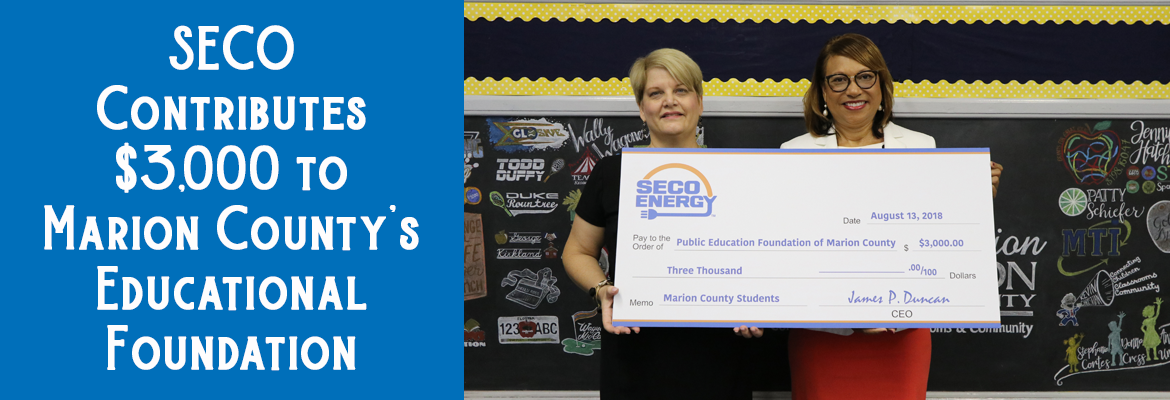
SECO Contributes $3,000 to Marion County’s Public Education Foundation

SECO Energy has contributed $3,000 for Marion County school students through the Public Education Foundation of Marion County (PEF Marion). As a local not-for-profit electric cooperative, SECO believes its contribution bolsters the community and provides much needed financial assistance to dedicated educators.


PEF Marion is a not-for-profit corporation whose mission is to financially and materially support Marion County Public Schools, its students and teachers. The Foundation is organized to assist students from as young as pre-Kindergarten to vocational and adult education programs.


The funds contributed to the Foundation can support programs such as the Golden Apple Teacher Recognition program that honors and rewards excellence in teaching; the Take Stock in Children initiative that provides deserving low-income young people/students the opportunity to escape the cycle of poverty through education; and Grants for Great Ideas that has awarded hundreds of grants to teachers and principals in support of teaching innovation – impacting more than 100,000 students.


SECO Energy’s $3,000 contribution can also benefit the Foundation’s Tools 4 Teaching program. Tools 4 Teaching accepts donations of unused office supplies from local businesses and puts them to good use in Marion County schools. Tools 4 Teaching allows teachers to shop for supplies for their classrooms – pencils, paper, art supplies and more – without spending their personal money. Tools 4 Teaching assists Coats 4 Kids during colder months – accepting donations of new or gently used winter coats for local children without a warm jacket.


CEO Jim Duncan stated, “As a not-for-profit cooperative, SECO supports its members by participating in community endeavors that support education. We have deep roots in Marion County and serve over 58,000 families and businesses in that county alone. Financially supporting education is an investment in future community leaders, members and possibly future employees. SECO is honored to donate $3,000 to Marion County’s Public Education Foundation to strengthen education in the community.”


“Like” SECO’s Facebook page and “follow” @SECOEnergy on Twitter for news releases and cooperative updates. Visit our Community page to learn more about SECO’s corporate citizenship and other community outreach initiatives.

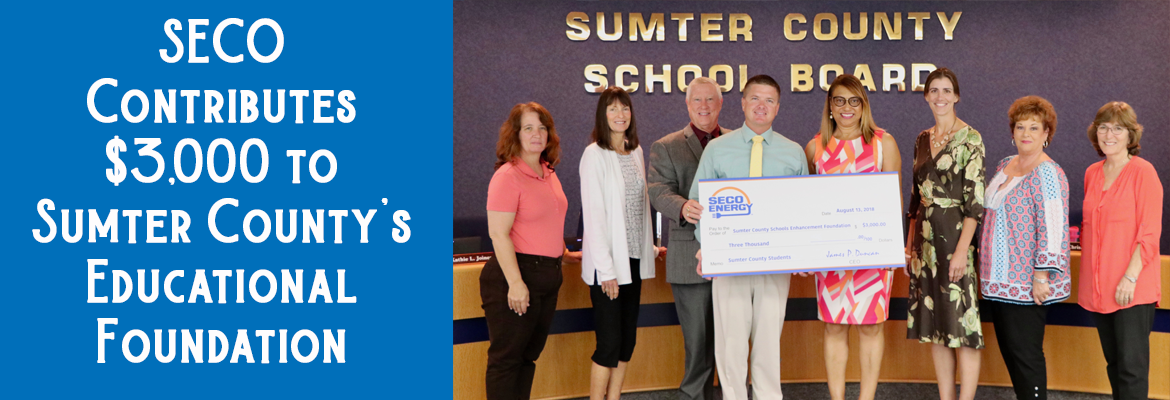
SECO Contributes $3,000 to Sumter County’s Schools Enhancement Foundation

SECO Energy has contributed $3,000 for Sumter County school students through the Sumter County Schools Enhancement Foundation. As a local not-for-profit electric cooperative, SECO believes its contribution bolsters the community and provides much needed financial assistance to dedicated educators.


Through its partnership with the Consortium of Florida Education Foundations (CFEF), the Sumter County Schools Enhancement Foundation maximizes the individual and collective strength of Florida local education foundations to support local partners and schools. The CFEF builds partnerships between local education foundations and businesses that impact students in the classroom.


Collectively, CFEF member education foundations raise $63 million annually to fund initiatives that increase Florida’s students’ achievements. These investments fund programs not covered by tax dollars. Investments include student scholarships, mentoring and drop-out prevention strategies, teaching innovation and recognition programs, classroom grants, college readiness and access programs, literacy improvement strategies, technical/career education initiatives and targeted support for low-performing students and schools.


SECO Energy’s $3,000 contribution can also be used to support back-to-school activities, teachers’ luncheons, training sessions and classroom supplies. The donated funds are provided for the benefit of teachers and students in Sumter County schools.


CEO Jim Duncan stated, “As a not-for-profit cooperative, SECO supports its members by participating in community endeavors that support education. We have deep roots in Sumter County – our corporate headquarters is located in Sumterville and we serve over 62,000 families and businesses in this county alone. Financially supporting education is an investment in future community leaders, members and possibly future employees. SECO is honored to donate $3,000 to the Sumter County Schools Enhancement Foundation to strengthen education in the community.”


“Like” SECO’s Facebook page and “follow” @SECOEnergy on Twitter for news releases and cooperative updates. Visit our Community page to learn more about SECO’s corporate citizenship and other community outreach initiatives.

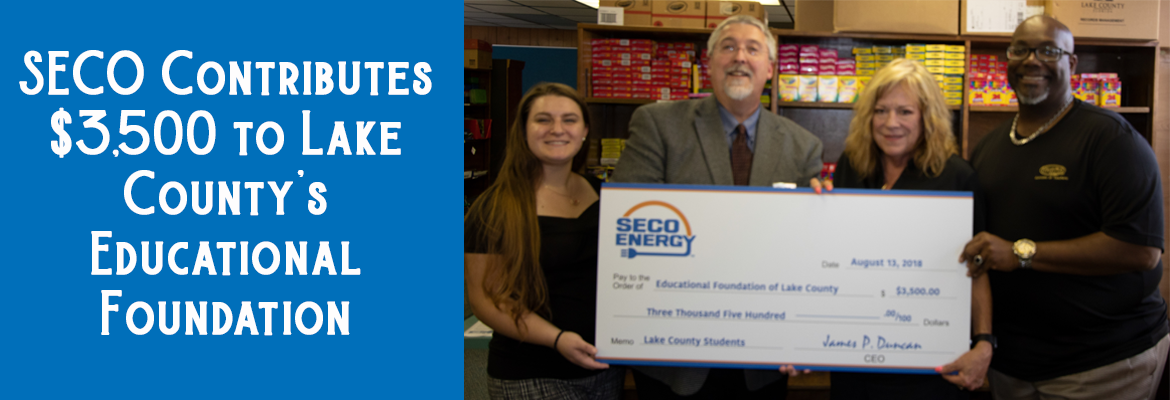
SECO Contributes $3,500 to Lake County’s Educational Foundation

SECO Energy has contributed $3,500 for Lake County school students through the Educational Foundation of Lake County. As a local not-for-profit electric cooperative, SECO believes its contribution bolsters the community and provides much needed financial assistance to dedicated educators.


The Educational Foundation of Lake County is a not-for-profit corporation whose mission is to serve as the connection between the community and public education, and evaluate resources to enhance the quality of education in Lake County. The Foundation is the direct support organization for Lake County Public Schools and is operated for the benefit of students and teachers.


The funds contributed to the Foundation can support programs such as the Lake County Teacher of the Year, Rookie Teacher of the Year and Employee and Volunteer of the Year; the LCS Science Fair; the Take Stock in Children initiative that provides deserving low-income young people/students the opportunity to escape the cycle of poverty through education; and Grants for Great Ideas that has awarded hundreds of grants to teachers and principals in support of teaching innovation – impacting more than 100,000 students.


SECO Energy’s $3,500 contribution can also benefit the Foundation’s Apple-Mart, where teachers and social workers shop for free. Each year, new teachers in the district are given a pass to the Apple-Mart where they can shop for school supplies for their classroom once a month. Principals in the district also receive passes to distribute amongst current teachers. The Foundation depends on donations from the community, local businesses and churches to stock school supplies for the Apple-Mart.


CEO Jim Duncan stated, “As a not-for-profit cooperative, SECO supports its members by participating in community endeavors that support education. We have deep roots in Lake County and serve over 65,000 families and businesses in that county alone. Financially supporting education is an investment in future community leaders, members and possibly future employees. SECO is honored to donate $3,500 to the Educational Foundation of Lake County to strengthen education in the community.”


“Like” SECO’s Facebook page and “follow” @SECOEnergy on Twitter for news releases and cooperative updates. Visit our Community page to learn more about SECO’s corporate citizenship and other community outreach initiatives.

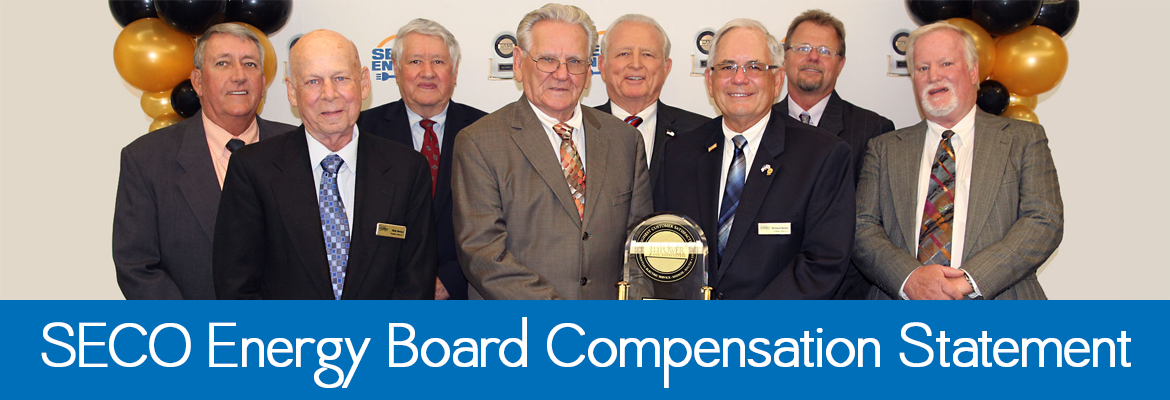
SECO Energy Board Compensation Statement

SECO Energy was founded in 1938 as Sumter Electric Cooperative, Inc., a small not-for-profit rural electric utility serving a few hundred folks in the Webster area. Over the years, sound financial management, appropriate governance policies and economic growth in Central Florida have resulted in the cooperative doing business today as a fiscally sound SECO Energy with a membership of more than 205,000 residents and business owners across seven counties.


Cooperatives in Florida are legislated by Florida Statute Chapter 425. Not only is SECO Energy in full compliance with the Florida statute, the cooperative also adheres largely to Florida Public Service Commission guidelines developed for investor-owned utilities (although cooperatives are not technically required by statute to do so). SECO also files its rate tariffs for approval and emergency response plan outline annually with the PSC.


SECO Energy’s member-elected Board of Trustees are fairly compensated for their service and the cooperative’s election guidelines make it easy for an interested party’s name to appear on the ballot. A potential candidate simply notifies SECO in writing of intention to run. No signatures or nominations are necessary.


The potential Trustee candidate must reside in the District, cannot be closely related to another Trustee or employee and must meet very general eligibility requirements per the SECO Energy Bylaws. In fact, four of the nine current Trustees have been elected to the Board in the last eight years. The cooperative encourages election participation at District Meetings and holds an Annual Meeting as required by Florida Statute. In 2018, SECO Energy’s Annual Meeting drew a crowd of nearly 7,000.


Once elected, Trustees are compensated for each monthly Board of Trustee meeting. The amount covers meeting attendance and the study time needed to prepare for Board meetings. The compensation is standard for this region and for a Board responsible for governance and the financial oversight associated with a company of this size with $855 million in utility plant. SECO Energy is the third largest cooperative in Florida and the seventh largest in the nation.


SECO Energy Trustees are not provided with company-paid health, dental or vision insurance or pension/retirement benefits. Trustees are encouraged to participate in trainings and conferences to provide the education needed to govern and oversee the utility.


For trainings/conferences, transportation type and dates/time is limited to the most economical. Overstaying of training/conference dates at company expense is not permitted. The cooperative’s policies prohibit the coverage or reimbursement of spouse or family member travel or entertainment expenses if they accompany a Trustee to a conference or training.


Board meeting dates and times are published two months in advance in our monthly edition of SECO News which is mailed with billing statements and posted on social media and SECOEnergy.com. Members are welcome to attend any meeting in its entirety (with the exception of executive sessions) and can examine the minutes of any past board meeting. Board of Trustee compensation records are released publicly as required in the cooperative’s Form 990. The cooperative publishes an Annual Report as well. SECO Energy is an award-winning utility in customer satisfaction.


SECO Energy has retired Capital Credits regularly as a true not-for-profit electric cooperative should. Capital Credits are the accumulation of all prior year’s revenue after the co-op’s operating costs and expenses have been paid. These credits are allocated on a pro-rata basis to each SECO Energy member’s account as “Capital Credits” and represent a portion of the member’s patronage with the cooperative in the prior fiscal year.


During its September 2017 meeting, SECO’s Board of Trustees approved a record $5.4 million Capital Credits retirement to be returned (retired) to members. Since SECO Energy’s inception, the co-op has retired more than $57.8 million to current and former members. Capital Credits returns are made possible by the sound financial stewardship of SECO’s Board, leadership team and flock of dedicated, cost-conscious employees. The cooperative anticipates (with Board of Trustee approval, of course) another healthy Capital Credits retirement at year end 2018.

Sunshine State Stats, July 2018

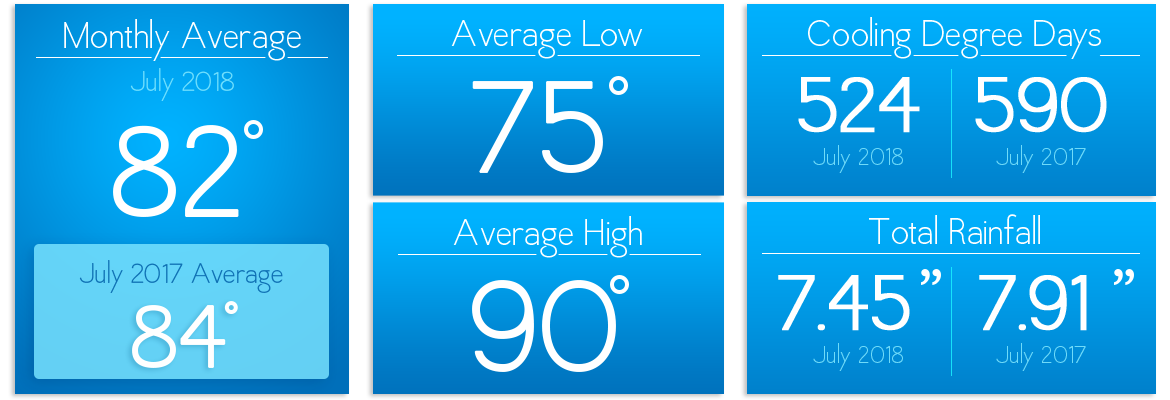
July 2018 was pretty darn hot with nearly daily rain showers. The average high was 90°. The average temperature was 82°, while July of 2017 had an average temperature of 84°. The average low was 75°, compared with an average low of 76° last July. Rainfall for July of 2018 was 7.45 inches compared to last July at 7.91 inches.


Sunshine State Stats July 2018 breakdown


There were 524 cooling degree days and 0 heating degree days for July 2018, while last year there were 590 cooling degree days with 0 heating degree days. The Degree Days are based on how much warmer or cooler the average temperature at a particular location is than 65°F. In other words, if the average temperature is 60° degrees outside on a particular day, there are 5 Heating Degree Days for that day in that location.


August 2018 is forecast to be somewhat the same as last year with average high temperatures in the 90s. Rainfall is forecast to be heavier than normal compared to 2017. The continuation of afternoon showers could give your HVAC units a much-needed break.


Hurricane Season Update: Chances that the global climate pattern El Niño will develop this fall were increased in the most recent forecast, boosting confidence in revised predictions for a below-normal hurricane season. The federal Climate Prediction Center’s July El Niño forecast is giving it a 65 percent chance of appearing in the fall, and about a 70 percent chance of a winter formation.


For Florida, the periodic warming of the equatorial Pacific Ocean can mean a less active hurricane season with fewer of the powerhouse Cat 5 tropical cyclones known to build during the peak months of August through October.


If you want to check historical usage, log into SmartHub to view past bills and charts. If your usage is high, SECO offers several energy-efficiency tools to help you identify energy wasters. Take the Home Energy Assessment to receive a detailed email tailored to your home’s features and lifestyle. The energy-saving advice will provide low-cost ways to decrease your usage – and your electric bill.


To easily calculate how much energy your appliances, lighting, electronic devices, and other energy-using items in your home consume, use the Energy Estimator. If you want a member of our Energy Services team to come to your home to perform a free energy audit, contact us today to book an appointment.

Florida Electric Cooperatives Association Honors SECO Trustee Vick

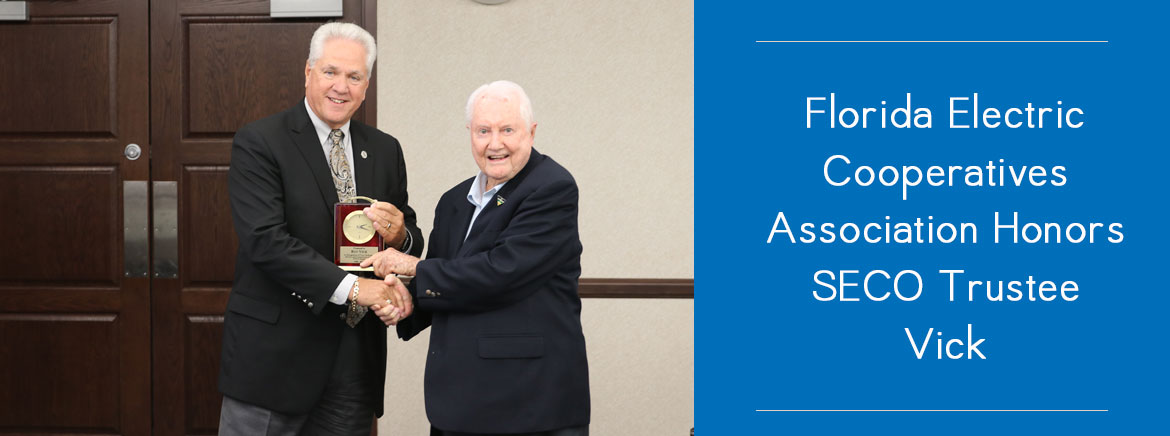
The Florida Electric Cooperatives Association (FECA) honored SECO Energy’s District 5 Trustee Ray Vick for his long-time service to FECA. Mr. Vick has worked closely with Florida’s statewide cooperative association and provided twenty years of guidance by serving on the FECA Board.


FECA presented Mr. Vick with a memento clock to show its gratitude for Mr. Vick’s years of service. The engraving reads, “Presented to Ray Vick In Recognition of Your Dedicated Service and Commitment to the FECA Board 1998 – 2018.”


Serving as District 5 Trustee since 1980, Mr. Vick resides in Inverness and became a SECO member in 1974. During his tenure, Mr. Vick has been an ardent supporter of the cooperative purpose and business model. Along with his Board peers, Mr. Vick is an integral component of SECO’s continued success.


Mr. Vick stated, “I would first like to thank Florida’s statewide association, FECA, for honoring my service. Serving millions of Florida cooperative members through my work over the last 20 years with the FECA Board has been very rewarding. I am particularly proud and humbled to have served my fellow SECO members by serving on SECO’s Board of Trustees for 38 years.”


CEO Jim Duncan thanked Mr. Vick for his FECA service, stating, “Trustee Vick has a long track record of working hard for energy consumers in Florida. With Mr. Vick’s FECA Board service and SECO Energy Board service, his commitment to Florida’s electric cooperative members is second to none. I’m grateful to Mr. Vick for his service and commitment to our members.”


Visit our Board of Trustees page for photos and brief bios of the Trustees along with an interactive District map. “Like” SECO’s Facebook page and “follow” @SECOEnergy on Twitter for news releases and cooperative updates.

SECO Supports Youth Energy Academy STEM Focus

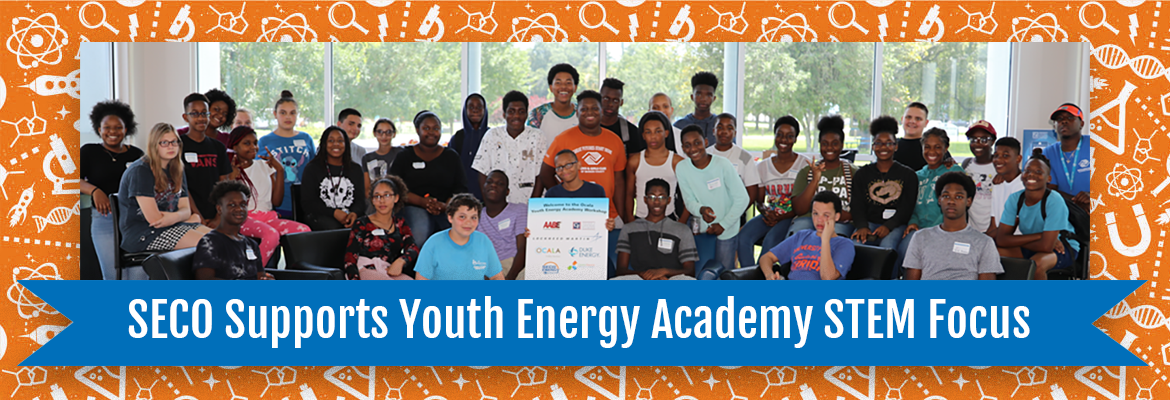
On June 14 and 15, local energy experts teamed up to provide high school students a real-life glimpse into the many careers in the electric utility industry. SECO Energy, Duke Energy and Ocala Electric Utilities partnered to bring the Fourth Annual Youth Energy Academy to life for more than fifty students in Marion County. The event was held at the College of Central Florida’s Hampton Center.


In conjunction with employees from the three electric utility providers, representatives from several other companies (College of Central Florida, Boys & Girls Club, CLM CareerSource, Lockheed Martin and DeConna Ice Cream) volunteered, presented or provided support. With a limited workforce, the business community understands the premise of investing in today’s youth to develop future leaders and foster diversity.


Kathy Judkins, SECO Energy’s Deputy Director of Civic, Charitable and Government Affairs stated, “SECO Energy, Duke Energy and Ocala Electric Utilities have formed a strong partnership in the quest to develop a talent pipeline of local students for the energy industry. At this year’s Academy, students had the opportunity to gain essential knowledge related to the array of jobs, careers and occupational requirements in the energy field.”


The two-day event was jam-packed with activities that ranged from learning how electricity travels from the generation plant to homes and what it takes to restore power during an outage to a hands-on live demonstration provided by Duke Energy’s Ronnie Bailey and Moise Graham. Students learned the difference between soft and hard skills via a presentation from Heaven Colon, CLM CareerSource. The students then explored high-skill, high-wage careers in science, technology, engineering and math (STEM) by taking a closer look at robotics. They met Forest High School EMIT program students – EMIT stands for Engineering and Manufacturing Institute of Technology.


Youth participants also learned about one of the fastest growing jobs in the industry – the Substation/Relay Tech position – from SECO Energy Manager Transmission and Substation Design Kenny Rodrigue and Environmental & Project Supervisor Ron Summers. Participants built solar cars to test in the sun, and found out that solar panels receive enough energy to power the cars to move when the sun is not shining.


The activities didn’t end there. On day two, the students toured the City of Ocala water treatment plant with Rachel Slocumb, Division Coordinator. Utilities Director Mike Poucher showed students what can occur while texting and driving through a demonstration of a pole versus car accident scene that included how to safely exit a vehicle. Participants also rode in bucket trucks and learned about Ocala’s fiber-optic internet system. Watch video clips of this year’s Youth Academy highlights at SECO Energy’s YouTube channel.


[embedyt] https://www.youtube.com/watch?v=pEjIr13Vjac[/embedyt]


SECO Energy CEO Jim Duncan stated, “The Youth Academy aligns with two key cooperative principles – Education, Training and Information and also Concern for Community. The energy field offers a multitude of diverse careers just waiting for talented candidates to apply. Participating in youth education programs gives SECO a hand in crafting its future workforce and offers local, talented youngsters employment opportunities close to home and family.”


Six years ago, the Florida Chapter of the American Association of Blacks in Energy (AABE) incorporated a Youth Energy Academy model focused on, but not limited to, minority students in St. Petersburg, Jacksonville, Orlando and Ocala. “AABE’s goal is to spark the interest of the emerging workforce by educating young people about opportunities in the energy arena. With over 240 Marion County students going though this academy so far, we believe we will see a few of them working in the energy industry,” stated AABE Florida Chapter President Mikle Gordon. The AABE Florida Chapter is lead by members from six energy providers, as well as a number of entrepreneurs and business partners.


Learn more about SECO Energy and its Concern for Community online. “Like” SECO’s Facebook page and “follow” @SECOEnergy on Twitter for news releases and cooperative updates.

Sunshine State Stats, June 2018

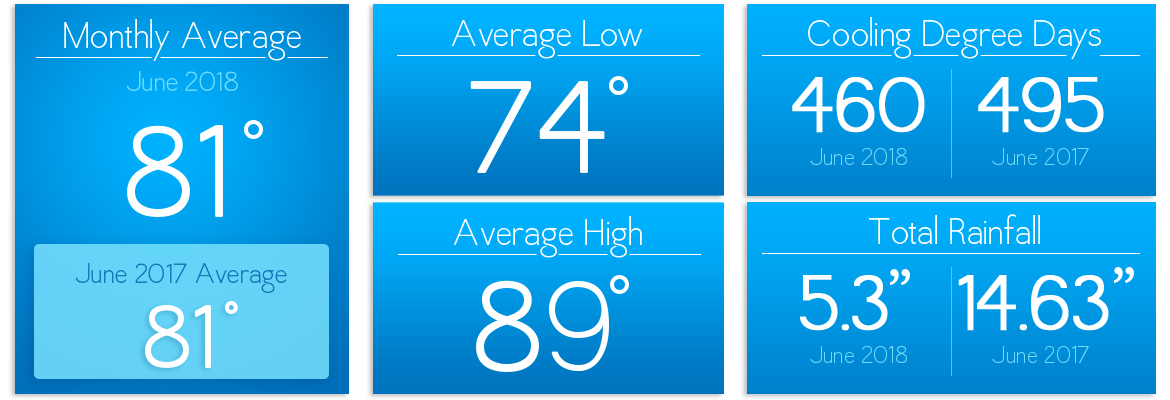
The weather in June 2018 was similar on average to June 2017. The average temperature this June and last June was 81°. Rainfall, however, for June of 2018 was 5.30 inches compared to last June at 14.63 inches.


June 2018 Sunshine State Stats breakdown


There were 460 cooling degree days and 0 heating degree days for June 2018. Similarly, last year there were 495 cooling degree days with 0 heating degree days. The Degree Days are based on how much warmer or cooler the average temperature at a particular location is than 65°F. In other words, if the average temperature is 60° degrees outside on a particular day, there are 5 Heating Degree Days for that day in that location.


July 2018’s temperatures are forecast to be above normal with lows in the 70s and highs in the low 90s. Rainfall is forecast to be heavier than normal compared to 2017. Remember that July is typically one of the hottest months of the year. The excessive heat and humidity will make your HVAC run more frequently, therefore impacting your electric bill. Remember 78 – 80° is the national standard for the HVAC in the summer. Set the thermostat higher to reduce your energy consumption. Just one degree higher can save 6 – 8% on your cooling cost.


If you want to check historical usage, log into SmartHub to view past bills and charts. If your usage is high, SECO offers several energy-efficiency tools to help you identify energy wasters. Take the Home Energy Assessment to receive a detailed email tailored to your home’s features and lifestyle. The energy-saving advice will provide low-cost ways to decrease your usage – and your electric bill.


To easily calculate how much energy your appliances, lighting, electronic devices, and other energy-using items in your home consume, use the Energy Estimator. If you want a member of our Energy Services team to come to your home to perform a free energy audit, contact us today to book an appointment.

SECO News, July 2018

Duncan’s Digest


Did you know SECO Energy serves over 200,000 homes and businesses in seven Central Florida Counties? Our 2,100-square mile territory houses 48 substations, over 12,000 miles of overhead line and more than 138,000 poles. SECO provides service to over 53,000 area lights that brighten roadways, sidewalks and members’ yards.


May 2018 SECO News Duncan's Digest


The 53,000 area lights are a significant component of our system. Crews are constantly on the lookout for lights that are out or burning during the day, and SECO typically repairs an area light in about 24 hours. To provide members and others with a fast way to report area light issues, SECO developed an easy-to-use online tool. This new system is called LightFinder.


In LightFinder, each area light is represented by an icon. Working lights are indicated by a green lightbulb icon. Lights already reported for repair are shown as a red wrench icon. For 24 hours after repairs are complete, the light icon changes to an orange check mark. Member-owned lights are expressed as blue icons, and inactive lights are gray


To report an area light outage or needed repair, visit StormCenter online. Locate the LightFinder icon and proceed to the LightFinder map. In the search bar at the top of the page, input the pole number or address to locate the area light.


Click the icon representing the light you wish to report. An info panel opens on the right side of the screen. Choose the light problem type from the drop-down menu, enter comments and continue.


Once reported, you will receive an email confirmation and a follow-up notification when the light is repaired.


LightFinder is also accessible through our online billing/payment account management tool called SmartHub which is available as an app for your smartphone or mobile device. To download, search SmartHub in your smartphone or tablet’s app store and complete the installation instructions. By clicking the icons on the home page of the SmartHub app, you can report area light outages through LightFinder or report a power outage through StormCenter.


These new online tools are designed for you, our members, to save you time and to help SECO communicate with you quickly. I hope you take advantage of the tools if needed.


Sincerely,


Jim Duncan

Chief Executive Officer



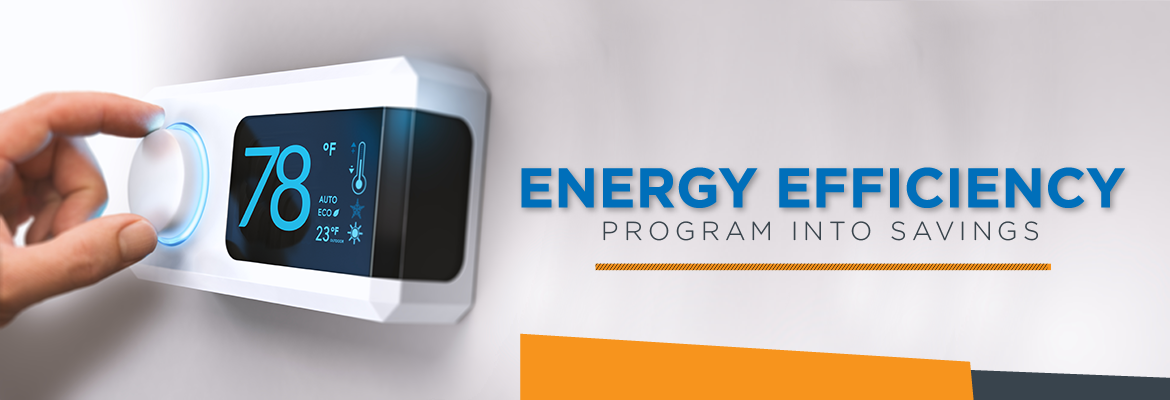
SECO News July 2018 Energy Efficiency Program Into Savings

Energy Efficiency – Program Into Savings


Installing a programmable Wi-Fi thermostat is a low-cost step to reduce energy costs. ENERGY STAR recommends using the programmable thermostat’s pre-programmed settings to save up to $180 a year on your electric bill. You can purchase a name-brand Wi-Fi programmable thermostat at your local hardware or big box store for under $100.


For optimum efficiency, utilize the thermostat’s pre-set energy efficiency controls. Resist adjusting the thermostat to temporarily make a room cooler or warmer. Continued adjustments will increase the amount of energy used, and will not heat or cool your home faster. If you have strip heating, manually adjusting your thermostat by more than a few degrees at a time will cause the strips to cycle on in error.


During the summer, set the temperature for 78 degrees or higher. Set at 68 or lower during winter months. Program “away” timeframes so that your HVAC does not run unnecessarily while no one is home. Keep your fan setting on “Auto” and the HVAC unit’s fan will run only as needed. If the unit requires batteries, be sure to change them once a year. Weak or dying batteries will prevent programmed settings from running correctly.


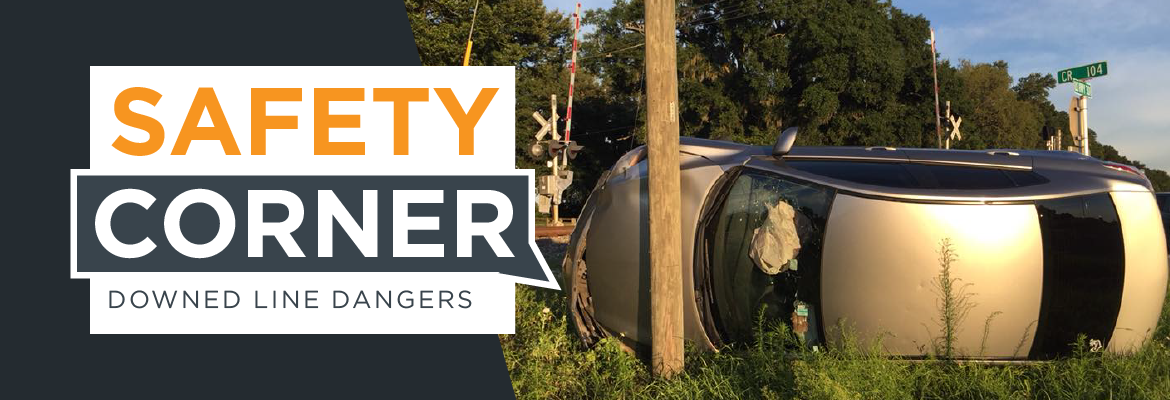
SECO News July 2018 Safety Corner Downed Line Dangers

Safety Corner – Downed Line Dangers


SECO Energy inspects thousands of poles annually to ensure they are in good condition. Poles damaged by bears, woodpeckers, high winds, vehicle accidents or weakening due to age are replaced. In the event of a tornado, tropical storm or hurricane, poles may break and result in downed power lines.


Downed lines are extremely dangerous. Always assume a downed line is energized. Never touch a downed power line and stay far away. Even the ground near a downed line has the potential to be energized – which can cause severe injury or death. Call 911 or SECO to report a downed line immediately.


Warn children of the dangers of downed power lines. Children are curious by nature and may want to touch or approach downed lines. Never allow children to play near electrical equipment or climb trees encroaching overhead lines. After storms, survey your area for hazards before allowing children outside to play. A downed line may be hidden by a tree or landscaping and not easily seen.


Power lines and poles are often found near roadways and can be damaged in vehicle accidents. In 2017, SECO crews repaired or replaced poles over 70 times as a result of vehicle accidents. If you strike a utility pole, stay in your vehicle unless it is on fire. Practice extreme caution before exiting. A downed line may be present on your car or close by on the ground. Warn emergency personnel and bystanders about possible downed lines nearby.


Understand the dangers of downed power lines. Play it safe, stay away from downed lines and report immediately.


Read the full July SECO News online.